Most people picture a protection dog as an animal that bites on command. That picture is incomplete, and it is also the reason so many buyers get the wrong dog. A truly trained protection dog is defined by what it will not do just as much as by what it will do. It stays calm around guests, ignores strangers on the sidewalk, and only engages when its handler clearly directs it to.
At Titan Protection Dogs, every dog we place goes through a structured program. Understanding how that program works will help you judge any dog you consider, whether it comes from us or from someone else.
Step one: a solid foundation of obedience
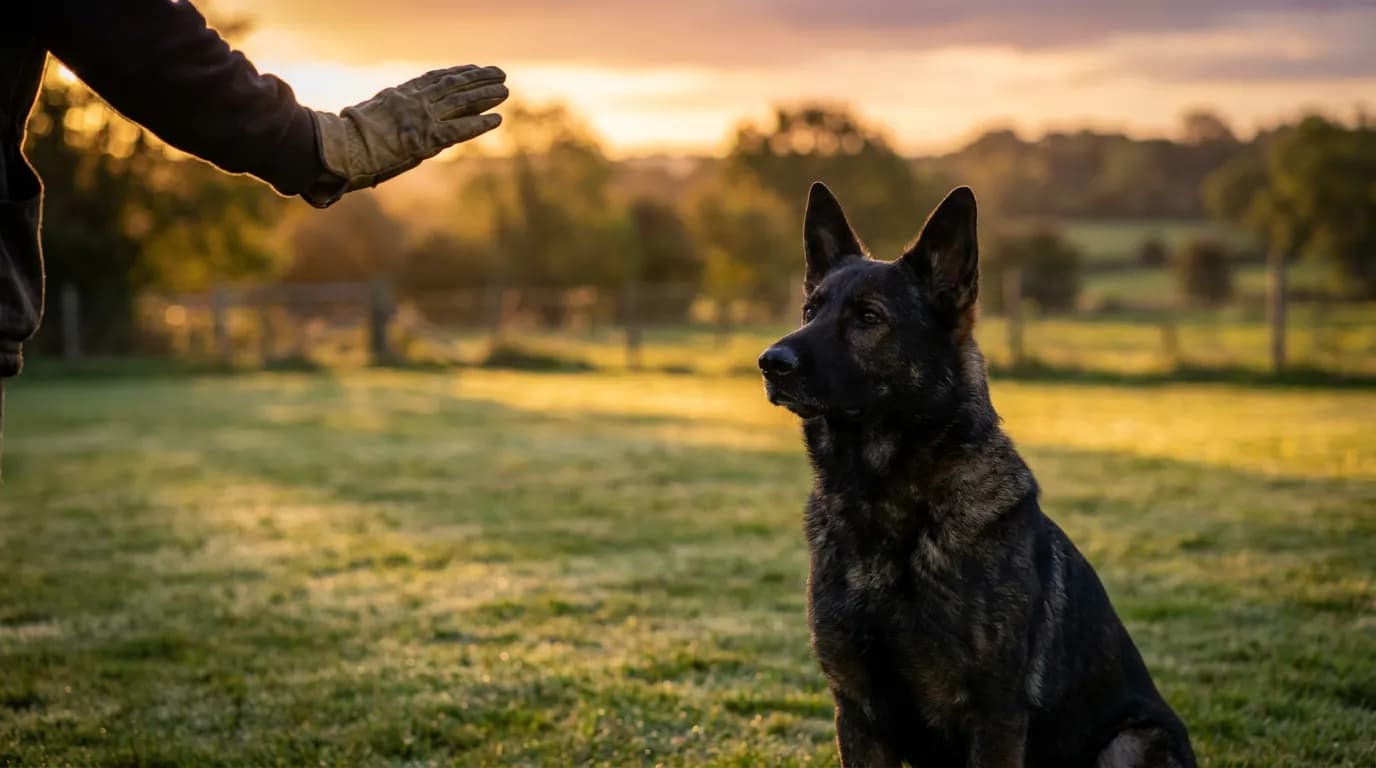
Every serious protection dog begins with basic obedience. Sit, down, stay, come, heel and place are not optional extras. They are the controls you will use every single day. A dog that cannot hold a down-stay at the front door has no business being trusted with protection work.
Obedience training also builds the relationship between dog and handler. Through hundreds of short, consistent repetitions, the dog learns that listening to a person leads to good things. That trust is what makes advanced work safe later. A dog that respects its handler on a quiet walk is far more likely to respect the handler in a stressful moment.
We train obedience with and without distractions. First in a quiet field, then around other dogs, traffic noise, children playing in the distance and strangers walking past. The goal is reliability in the real world, not just on the training ground.
Step two: socialization and nerve stability
Before a dog can be trusted to defend, it must be confident and stable. Nerve strength is the ability to stay composed when something startles it, such as a dropped pan, a loud engine or a stranger approaching quickly. Dogs with weak nerves tend to react out of fear, and fearful dogs are the ones that become liabilities.
We expose each dog to many surfaces, sounds, environments and people in a controlled way. Elevators, slippery floors, car rides, crowds and busy streets all become normal. A socially stable dog can sit under a restaurant table or wait calmly in a hallway while you talk to a neighbor.
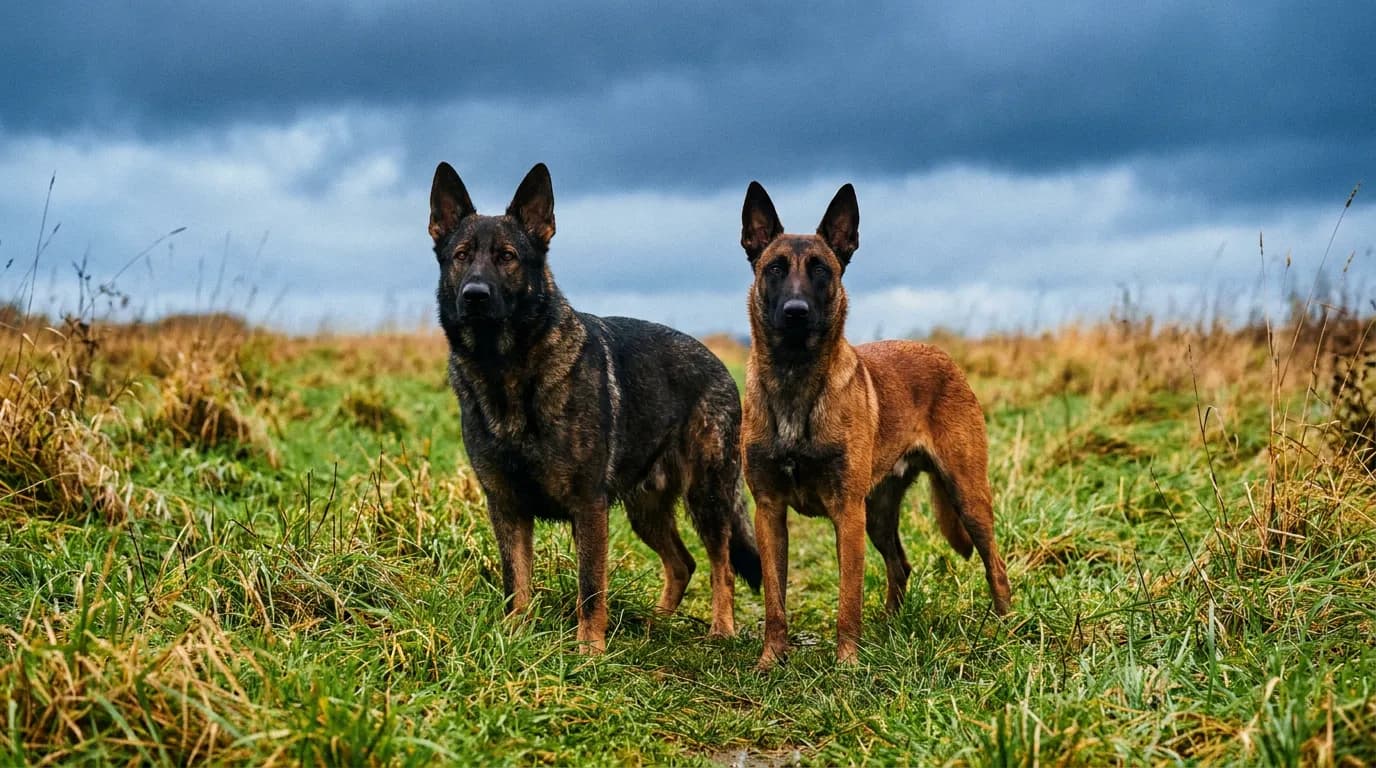
This stage is also where we separate dogs that have the right temperament from those that do not. Not every German Shepherd or Belgian Malinois is suited to protection work, and an honest trainer will say so. Only dogs that show confidence, clear thinking and a willingness to work with a person move forward.
Step three: controlled drive and protection work
Once obedience and stability are in place, we introduce protection exercises. These are built on the dog's natural drives, including prey drive, defense drive and the desire to guard its space. The key word throughout is control.
A trained dog learns to bark on command, to hold a threat at a distance, to out, meaning to release immediately when told, and to return to heel. The release is the most important skill in the whole program. A dog that will bite but will not let go is dangerous. A dog that engages and then disengages the instant you say the word is a professional-grade partner.
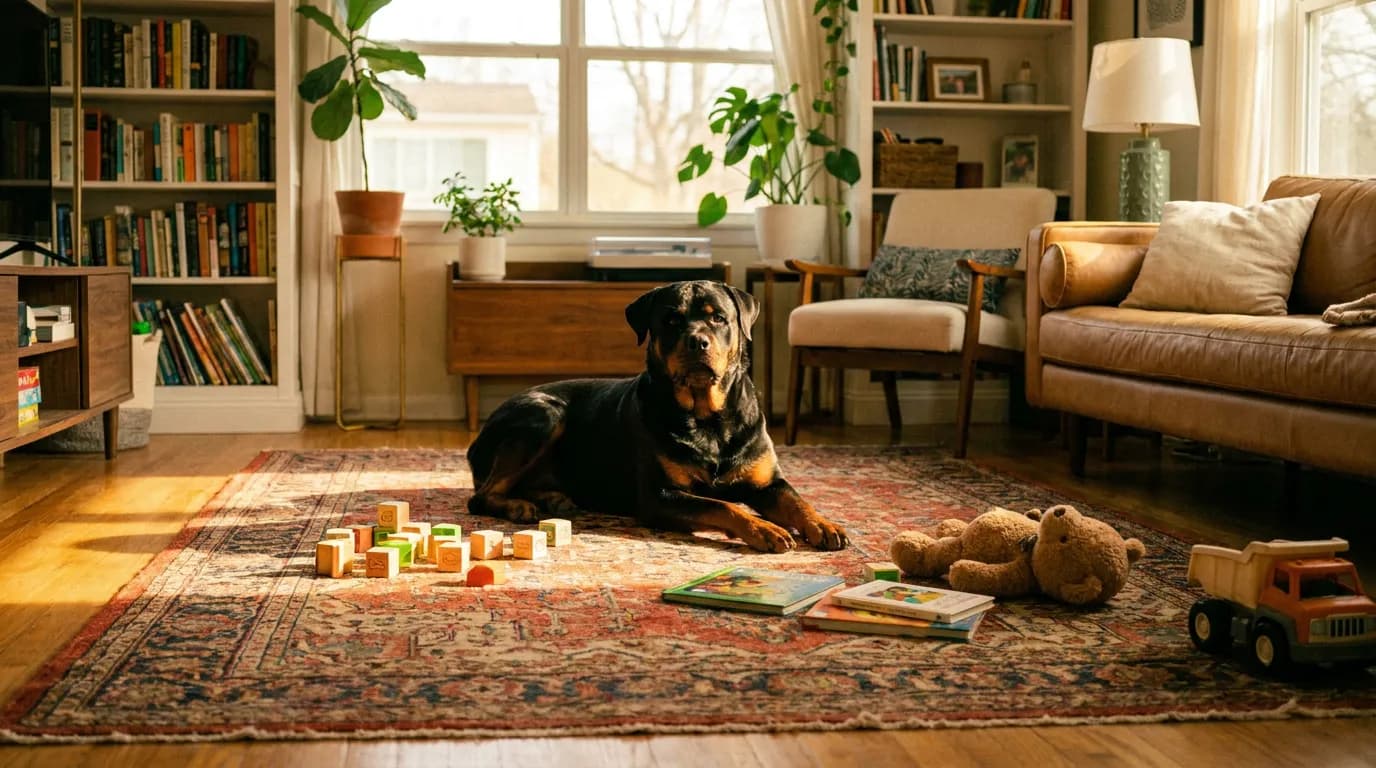
We also teach the dog to tell the difference between a real threat and normal life. Delivery drivers, houseguests and children's friends are not targets. Proper training teaches discrimination, and good handlers reinforce it every day.
Step four: transferring the dog to you
A dog is only as good as the person holding the leash. That is why the handover is a training phase of its own. We teach new owners the commands, the body language, the correct tone of voice and the daily routines that keep the dog sharp and balanced.
Expect to practice with your dog under our guidance, ask questions, and repeat exercises until they feel natural. We would rather spend an extra hour with you than send a dog home to an owner who is unsure. Ongoing support after purchase is part of the service, because training is never truly finished.
What this means when you buy
When you evaluate a trained protection dog, ask to see the obedience first. Ask the seller to show you the dog in a down-stay while someone walks by. Ask to see a clean release. Ask how the dog behaves around children, other animals and unfamiliar places. A confident, calm dog that responds instantly is a good sign. A dog that is wild, over-excited or hard to control is not trained, regardless of the label.
If you are weighing a trained adult against a puppy, read our guide on how to choose a K9 protection dog, then browse the trained dogs we currently have available. When you are ready, send us an inquiry and we will talk through your home and goals before recommending a dog.
Related: available protection dogs, request a consultation.
Need Help Choosing a Protection Dog?
Every dog has individual training, temperament, and care requirements. If you are considering a protection dog, explore the available options and discuss your circumstances with Titan Protection Dogs.